
Buying a used motor yacht can be confusing. Sometimes a boat looks bad but is an easy fix. Other times, a nice-looking boat hides expensive problems. Learning a few key things can make you a smarter buyer.

Start with the Teak
Look at the aft cockpit teak decking first. If it is clean, sanded, and oiled, the owner probably took care of the rest of the boat too. Bad or rotted teak often means the owner let other maintenance slide.
The Big Difference: Cosmetic vs. Structural
Most problems you see on the hull are just cosmetic. The shiny outer layer is called gelcoat. Over the years, it gets scratches, spider cracks, chips, and fades from sun and weather. These do not affect the strength of the boat. They can be polished or repaired for a few thousand dollars—no need to panic.
But you need to check for deeper problems:
- Touch and press on any crack or suspicious spot.
- Look at the back of that spot from inside the boat (open a panel or look in a locker).
- If the same crack is visible from both inside and outside, that is a real structural crack in the fiberglass hull. This is often from an impact or stress point the boat couldn’t handle. This is a deal-breaker. Walk away.
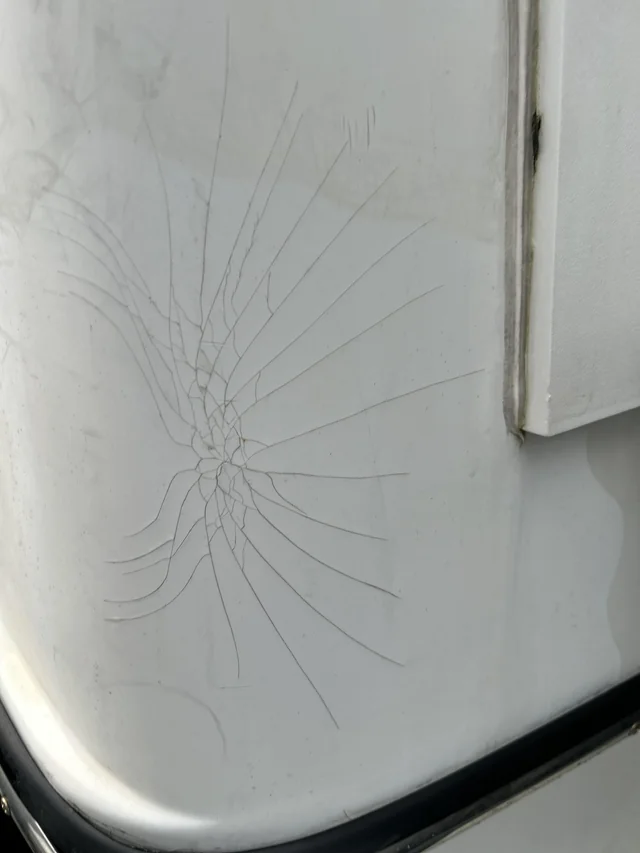
The Simple Rule
- Scratches, spider cracks, faded gelcoat = Cosmetic. Probably okay.
- Crack you can feel moving or see from inside the hull = Structural. Walk away.
A yacht with good teak and only cosmetic hull flaws is often a solid, well-maintained boat. Focus on that, not the surface scratches.
Inside the Boat: Cosmetic Choices and Wiring
Interior Cosmetics Are Personal
How you want the inside to look is up to you. What one buyer finds tired, another finds perfectly fine. But the cost to bring a cabin up to your standard depends a lot on where you are.
- Carpets and sofas that are worn out are easy, cheap fixes.
- Wooden wall panels that are badly worn can be expensive to repair or replace.
Watch Out for Sagging Vinyl (Especially in Hong Kong)
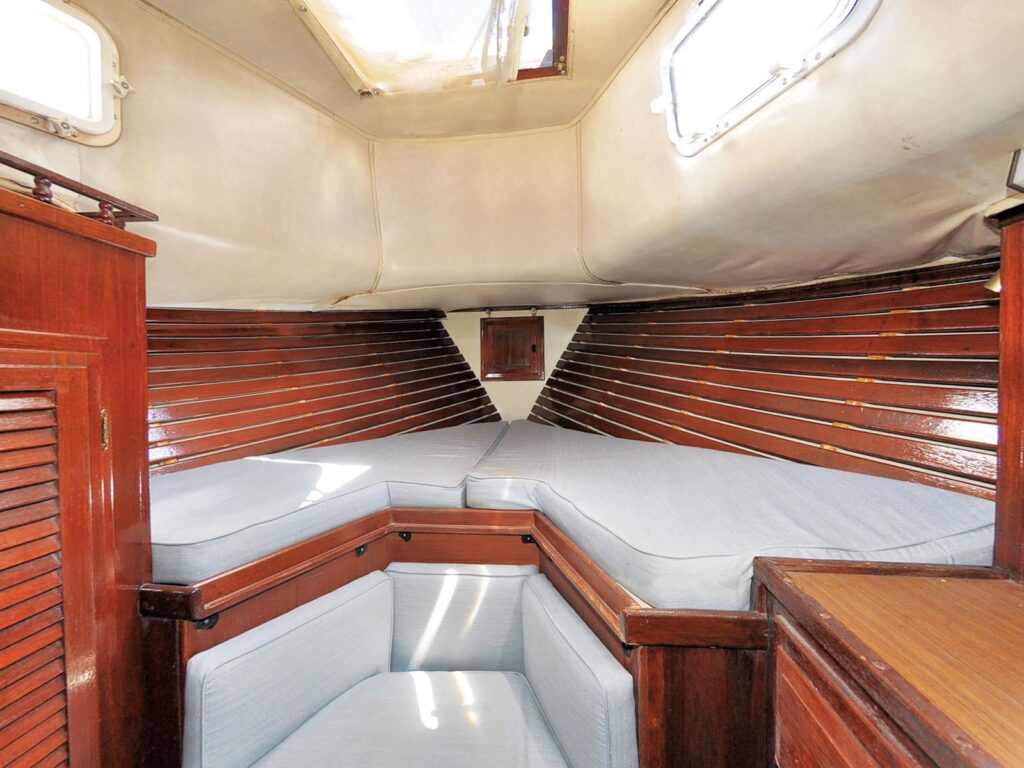
Many European yachts use wall panels covered in vinyl. In a hot, humid place like Hong Kong, the glue that holds the vinyl to the wood or fiberglass backing eventually fails. After a few years, the walls start to sag and peel.
This is purely cosmetic, and it can be fixed—but it’s a pain, and it’s costly out here. On a 50-footer, redoing the panels can run HK$100,000 or more. Your options are:
- Live with it,
- Remove the vinyl and have a shipyard apply wood lamination,
- Or use it as a bargaining chip to negotiate the price down.
It’s entirely your choice—just go in with open eyes about the cost.
Check the Electrical Switches
Finally, test the switches and electronics. If they work, that’s a good sign the wiring is in decent shape. A well-built international-brand yacht should have a solid, standard electrical installation. If switches are dead or flickering, get a marine electrician to inspect before you commit.
The Simple Rule
- Worn carpet, sofas, faded vinyl = Cosmetic. Fixable, but price it in.
- Dead or unreliable switches = Check the wiring before buying.
Quick Check: Generator & Air Conditioning
Start With the Water
- Generator: When it’s running, look outside the boat for a steady stream of water coming out of the exhaust. That’s the cooling water being pumped through the generator. No flow = cooling problem.
- Air‑Conditioning: Before you turn the AC unit on, first switch on the AC pump (clearly marked on the switch board). Then go outside the boat and verify that water is flowing out. Seeing that stream tells you the AC cooling pump is working.
Why Things Fail
The most common reason for generator or AC failure is a blocked or restricted cooling‑water flow.
- Check the air‑con pump and sea‑valves in the engine room. If the seawater inlet (sea valve) is closed or clogged, the pump can’t draw water, and both the generator and AC will overheat.
- Generator’s dedicated water‑inlet valve must be open. If it’s shut or restricted, the generator’s own pump can’t circulate coolant.
Generator‑specific tips
- The water pump inside a generator uses a rubber impeller that spins to push water through the cooling system.
- When the impeller cracks or wears out, water flow drops, the generator heats up quickly, and it will shut down to protect itself.
- Replacing the impeller is a routine maintenance item—usually cheap, but you need to schedule it before it fails.
Bottom line: If the generator or AC isn’t working, open the sea valve, look for a water stream outside, and inspect the pump impeller. Fix the water flow first, and the systems should run again.
Engine: The Heart of the Boat
The engine is the most expensive and most critical part of a yacht. Engine problems can cost tens of thousands to fix. So take this seriously.
First: Check the Model & Parts Availability
Before anything else, note down the exact engine model number. Search online to confirm you can get spare parts easily. If it’s an obscure or discontinued model, repair costs will skyrocket and waiting times will be long. A common, well-supported engine (like Volvo Penta or Caterpillar) is always safer.
Listen & Watch When It Runs
If you get a chance to start the engine:
- Listen carefully. A healthy engine sounds smooth and deep. Metal clicking or knocking noises are a red flag—that suggests internal wear or damage.
- Check for smoke. The exhaust should be clear or light gray. Black or white smoke means something is wrong.
- Look for water flowing out the sides of the boat (the exhaust outlet). Steady water flow proves the cooling system is working and the water inlet valves are not blocked.
The Cooling System Check
Engine overheating is the most common problem, and it’s usually caused by one of two things:
- Blocked underwater water inlet — Barnacles and marine growth clog the seawater intake, cutting off the cooling flow.
- Worn impeller — The rubber impeller in the water pump wears out and can’t circulate coolant properly.
Both are fixable, but they need attention.
Fluid Checks
- Coolant level — Should be at the marked line. Low coolant suggests a leak.
- Engine oil level — Check the dipstick. The oil should be a normal brown color, not black or very dark. Dark, thick oil means it’s overdue for a change and the engine has been working hard or neglected.
If oil is very dark or the engine has never had a coolant or oil service on record, factor in the cost of full fluid changes as part of your offer price.