

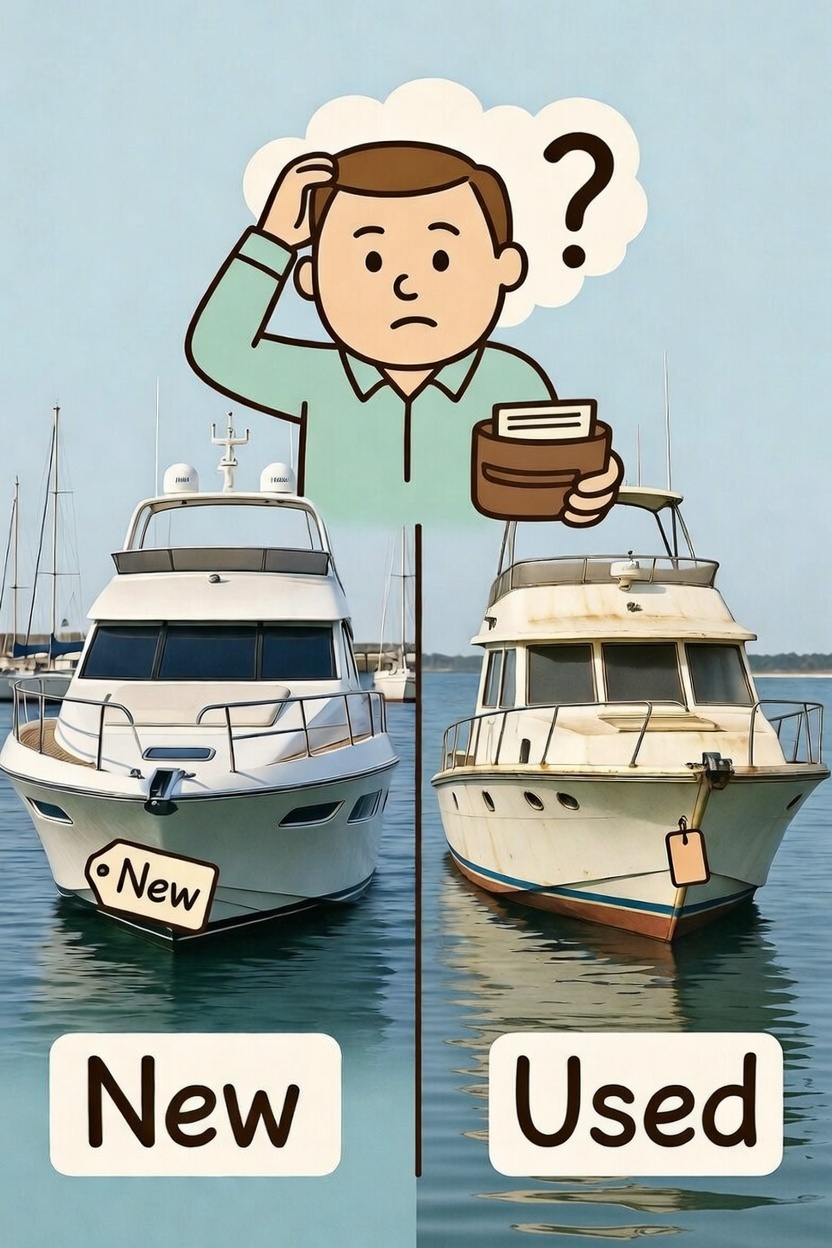
When it comes to buying a boat, one of the most common questions is simple: should you buy new or used? The honest answer is — it depends.
The first and most obvious factor is your budget. If spending is not a concern, buying a brand-new boat is naturally attractive. A new boat allows you to customise finishes, choose your preferred interior colour schemes, select electronics packages, and enjoy the peace of mind that comes with warranty coverage. Everything is untouched, clean, and backed by the manufacturer. There is comfort in knowing the engine hours are zero and the hull has never been stressed by previous usage.
However, that does not automatically mean a used boat is the better financial decision. The comparison becomes more interesting when we look at different size categories.
For smaller boats — particularly below 40 feet, and especially around 30 feet or below — new boats often represent surprisingly good value. In markets like Hong Kong and across Asia, the price difference between a new and a five-year-old speed boat may not be dramatic enough to justify the risks of buying used. For example, if a brand-new speed boat costs around HKD 800,000 and a five-year-old version is priced at HKD 400,000–500,000, many buyers will carefully consider and prefer to pay the additional HKD 300,000. In return, they get to customize of choose options they like, they receive a new engine, new hull, full warranty, and significantly lower risk of hidden maintenance issues. When used boat owners are firm on pricing and unwilling to negotiate meaningfully, choosing new can make practical and financial sense.
As boats get larger, the equation changes. Once you move into the 40-foot range and beyond, pricing increases substantially. A 40-plus-footer may cost HKD 5–6 million or more. The moment a brand-new yacht leaves the dealership, it will typically experience an initial depreciation — often in the range of 15% to 20%. This is similar to buying a new luxury car. The first owner absorbs the steepest drop in value.
That said, depreciation is not a simple formula. There is no fixed rule such as 5% or 10% per year. A boat’s value depends on several factors: overall condition, maintenance history, brand reputation, market availability, and demand. Supply and demand ultimately govern pricing, just like any other asset.
Condition plays a particularly important role. A well-maintained five-year-old yacht — for example, a clean and properly serviced Princess Yachts 50-foot motor yacht — that is still 30% cheaper than a brand-new equivalent can be very attractive to buyers, even if it is priced slightly higher than other used boats of the same model. Serious buyers often prioritise condition and maintenance records over simply chasing the lowest price.
Brand and model selection also matter. As a smart buyer, it is generally wise to choose a reputable brand with stable demand. However, caution should be taken with models that flood the market with too many units in a short period. Excess supply can affect resale value. A practical layout, solid engineering, and good engine room accessibility are more important than flashy design elements. Engine room space may seem like a minor detail at first, but when maintenance or repairs are required, accessibility can significantly affect labour costs. A beautifully designed yacht that requires engines to be partially dismantled for minor servicing can quickly become expensive to maintain.
So, will you always lose money buying a new yacht? In most cases, yes — at least in the short term. Boats are lifestyle assets, not investment instruments. Expecting to buy new and resell at a profit is generally unrealistic. However, losses are not always as dramatic as people fear. If you negotiate a strong purchase price, benefit from favourable exchange rates, maintain the vessel properly, and enjoy it fully during ownership, you may later resell it at a solid market price and feel satisfied with the overall experience.
Ultimately, the decision between new and used comes down to your priorities. If you value warranty protection, personalisation, and peace of mind, new may be the right choice. If you prioritise value retention and are comfortable assessing condition carefully, a well-maintained used yacht can be an excellent purchase.
There is no universal answer — only the right answer for your budget, risk tolerance, and boating lifestyle.
Hope you found this article useful
Baggy Sartape