
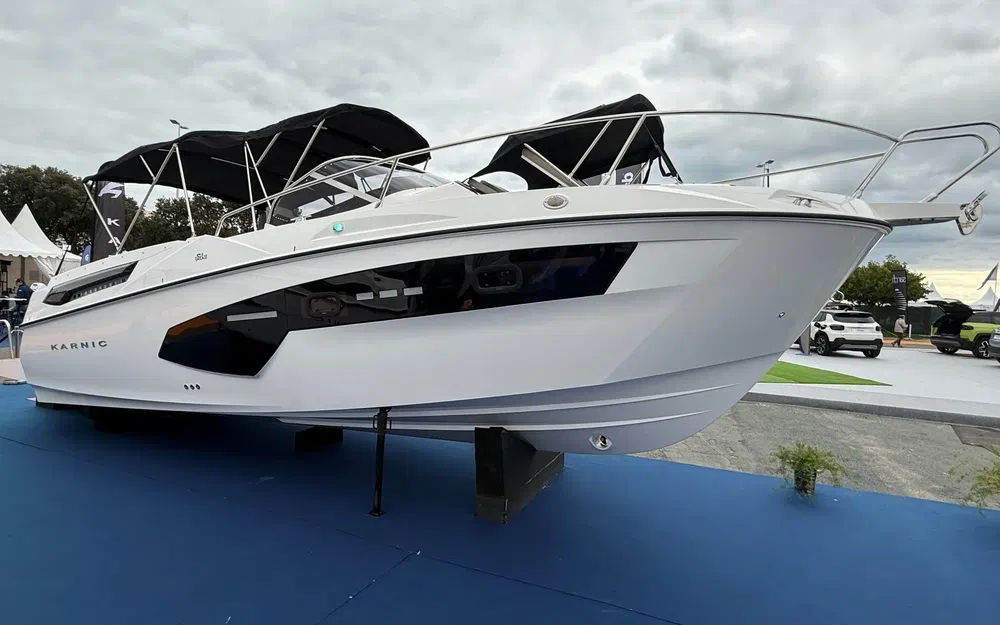
One of the most complex vehicles you can buy is a boat. It doesn’t just need to meet demands of safety and durability in harsh conditions — it also needs to look appealing, feel luxurious, and accommodate its users comfortably. All of this comes at a cost, and that cost can vary enormously.
What Drives the Price of a Speed Boat
The price of a boat depends on many things: the material it’s built from, its weight (which shows how much material is needed), and of course its size. Then come the interiors, seating, extras, and high-tech gimmicks. These factors can push the price of a speed boat anywhere from $50,000 to $500,000. In fact, there’s practically no limit — some Italian brands’ only selling point is that they are Italian.
The Sweet Spot: 7.5 to 8 Meters
Where you can maximize value for your money is around the 7.5 to 8-meter size — and there’s a good reason for that: logistics and international shipping. Quality boats are still mainly made in Europe, largely because of a very long culture of leisure boating and a deep understanding of user dynamics.
Here’s the key detail: if a boat becomes wider than 2.45 meters, it can no longer fit inside a standard 40-foot container, and that changes logistics dramatically. So the maximized size is roughly 8m × 2.45m — a boat that can be dismantled and fit inside a container. That container can then be shipped anywhere in the world, and an experienced company takes on the job of removing it, reassembling it, and putting it on the water.
This size is also the minimum at which you can fit a proper marine toilet. Smaller than this, a toilet is very difficult to install alongside its drainage system. Portable toilets are not for everyone — generally, ladies and kids nowadays will not be happy. When your kids and their friends want to go for a small cruise, they won’t be pleased to use a portable toilet that exposes them to everyone.
At this size, the front of the boat can also be open or have a cabin.
One more thing that keeps this size affordable is not having a generator and air conditioning. Adding a generator and the whole electrical system that goes with it is very expensive and troublesome — because the one thing that always goes wrong on a boat is the air conditioning.
Outboard Engines Make Sense
Outboard engines are the most sensible choice for a speed boat. If you’re running a big motor yacht, inboard engines are more efficient. But for smaller boats, outboards are the smartest choice. Inboard engines are expensive to install, prone to problems, and very expensive to repair because access is hard. They’re also expensive to service, and as they age, they develop leakages where the propellers or drive units attach to the boat.
Logistics matter here too: it’s easy to ship a boat without engines, since it’s lighter, and the engines can be bought and installed in the destination country.
Why Prices Suddenly Jump at 9 Meters
As boats get bigger — even from 8 to 9 meters — prices substantially change and take a big jump. First, even if it doesn’t seem so from the outside, the interior volume has increased a lot, and far more things, decorations, and finishing are added. A 9-meter boat also normally starts to have twin outboards, which makes the price significantly higher.
So, for example: if a new 8-meter boat costs you $100,000, the 9-meter will cost almost $200,000.
The logistics of bigger boats are expensive when they don’t fit in a container. They require flatrack spaces, which are pricier. They need stronger metal cradles for shipment, and specially experienced crew to lift the boat, put it on the water, and tow it. Then comes reassembly, and so on — the cost increases a lot. But the volume of the boat also increases a great deal. In an 8-meter boat, you may not be able to stand straight in the cabin. A 9-meter boat has plenty of space, a bigger toilet with a shower, and hatches with better access to pumps, wiring, and tanks.
What About Smaller Boats?
Smaller boats are also cheaper, but boats below 7 meters are sometimes too small — unless you’re using them in safer waters. The smaller the boat, the more it will wobble in big waves. In a place like Hong Kong, where ferries create wakes, a small boat caught at a bad angle can come dangerously close to tipping over. You also get smaller interiors and a bumpy ride on longer outings.
Still, a small boat can be great if you’re using it around the islands and you know the waters well.
The takeaway: boat pricing isn’t arbitrary. It follows a clear logic of size, materials, equipment, and — above all — logistics. Understanding where the container-friendly sweet spot lies (around 8m × 2.45m) explains both why that size offers the best value and why crossing into 9-meter territory makes the price jump so dramatically.